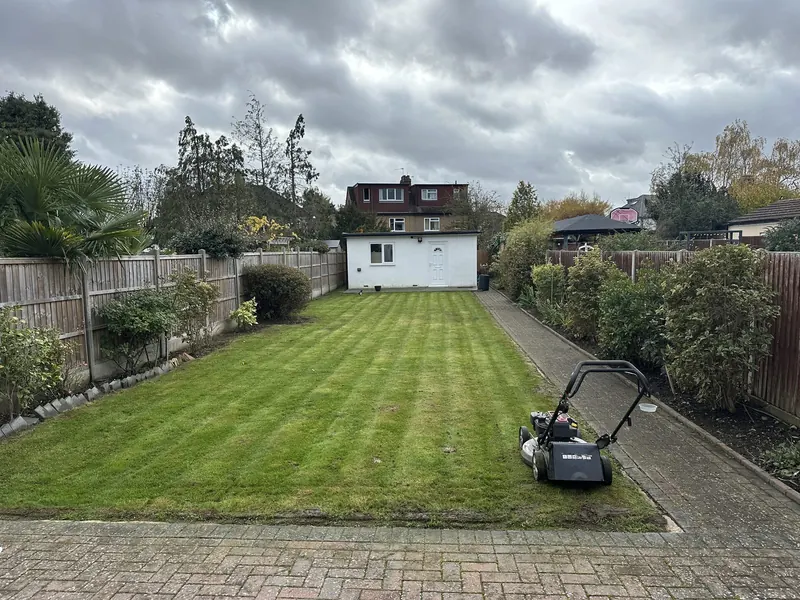
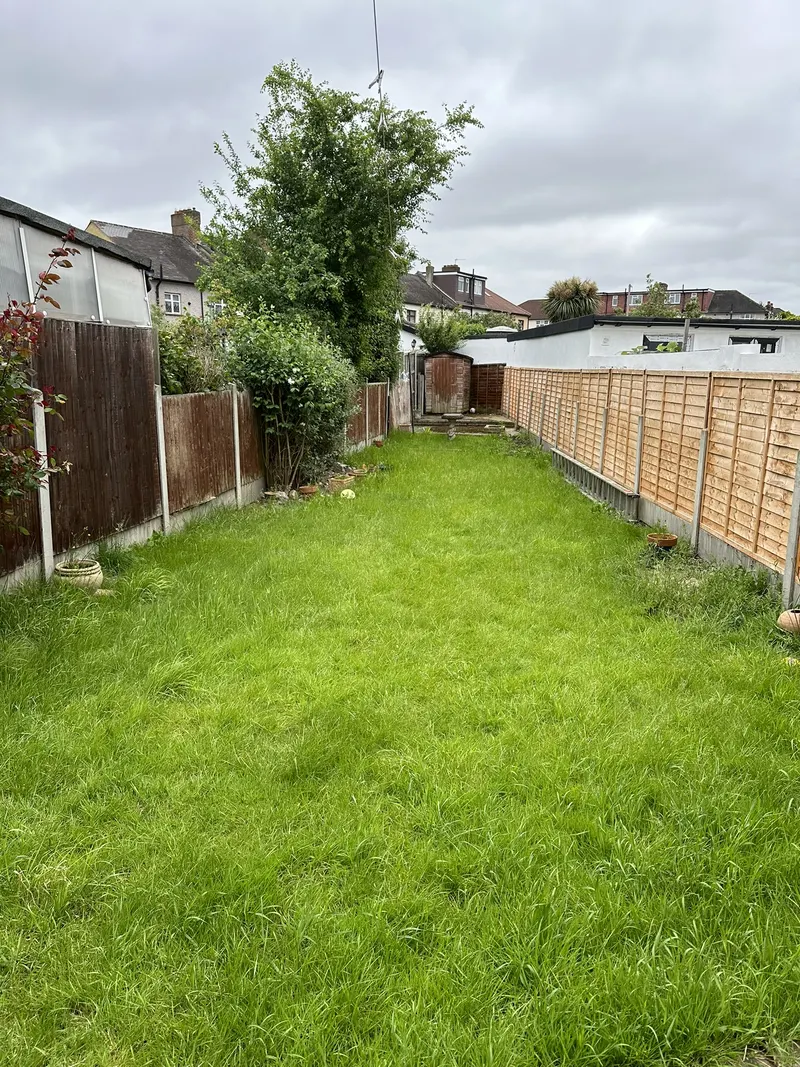
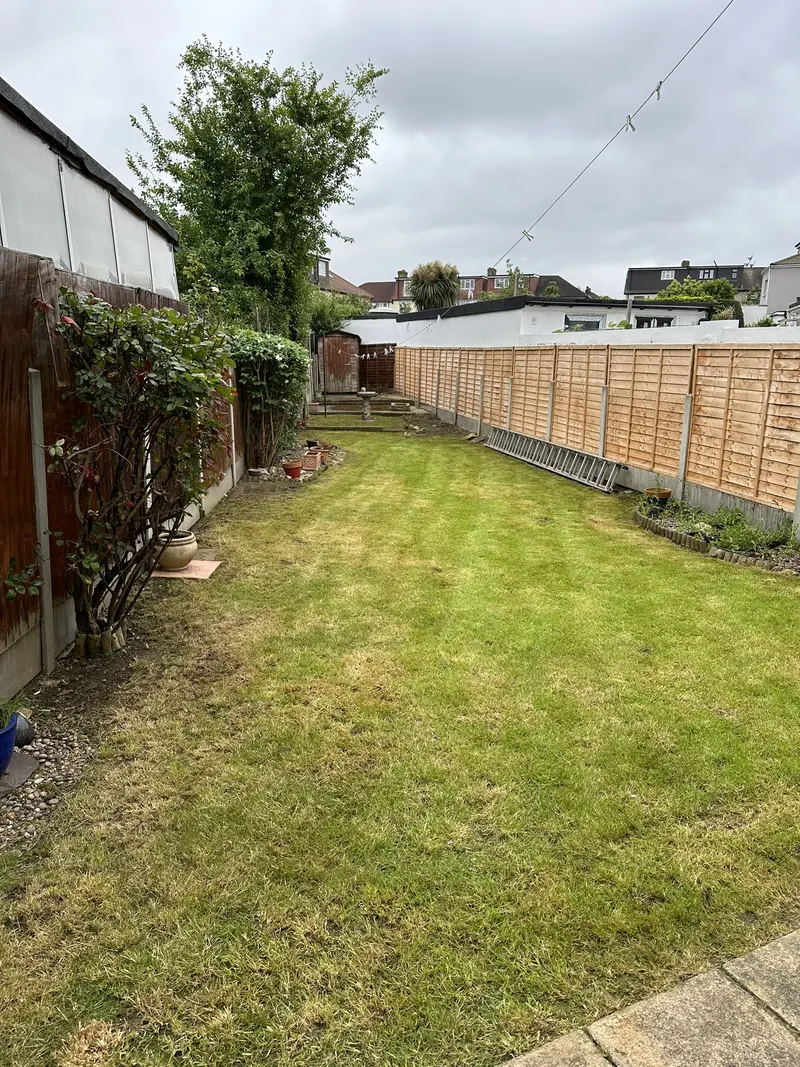
Specify the cut by how the lawn is used
Use one photograph to define the area that should be mown and another to define the finish. If a border curves round the grass, show where you want the line to follow it. If the lawn slopes, include a view across the slope and the steps or ramp that lead there. A lawn broken into several islands may need a different access plan from a single rectangle.
For a one-off cut, show the current length and note any patches that are soft, recently laid or deliberately left long. For regular mowing, explain which areas you want to look consistent and which should be reviewed as you use the garden. An edge beside a gravel strip needs a separate note from an edge beside paving. Describe any obstacles normally left in place.
Agree the finish before work starts. The centre of the lawn, the margins and any strip around a shed can be considered separately. If you want to keep clippings, show a suitable place to gather them. If you would like them taken away, have that part recorded in the written quotation. Tell us about any route that must be swept after the cut.
When a photograph shows a mix of lawn and tall weeds, mark both areas. A mower finish may be the right request for the lawn while the adjacent area needs an assessment for rough cutting. The two descriptions make a more accurate brief than calling the entire garden a lawn.
Cutting heights, first cuts and ground conditions
The RHS lawn mowing guide suggests a high setting for the first spring cut and mowing in dry conditions where possible. It gives ordinary domestic lawns a summer guide of 13–25 mm, with a higher finish of up to 40 mm in spring and autumn. Those figures are guidance rather than a specified result for your garden. Grass length, use and condition inform the agreed finish. If the grass needs a rough first cut, see Strimming and brush cutting.