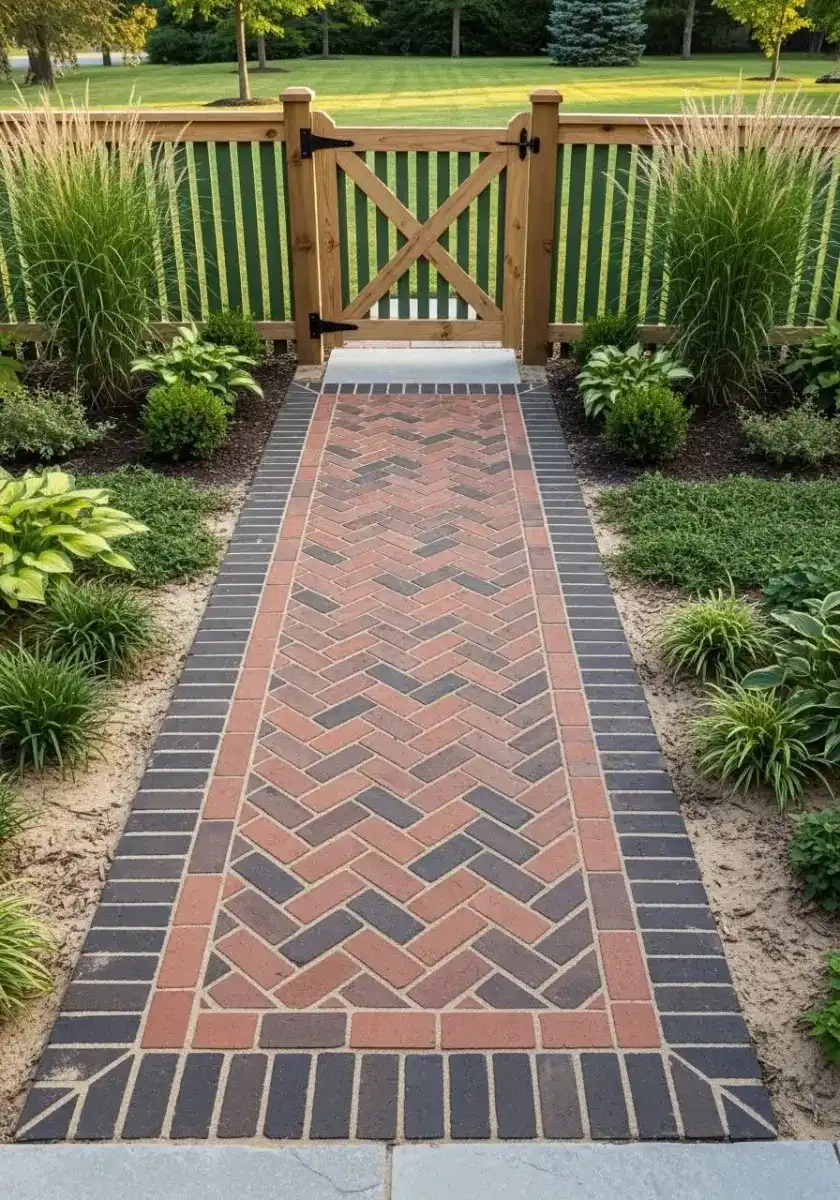
Establish what can stay
Existing plants, paths and structures can influence the new layout. Mark the features you want to retain and explain why they matter. A useful path may need to remain in place. An established planting area might be the starting point for the arrangement.
The ground needs understanding before a finish is selected. Tell us about earlier surfaces, patches that settle or areas where water collects. If you know about an old base beneath the lawn, include that information.
A landscaping quotation is made per job. The square metres, ground and soil condition, preparation and access all contribute to the assessment.
Connect the work from one area to another
A garden is easier to use when its routes and areas make sense together. Consider how you move from the door to the lawn, how a shed is reached and where the planting can be maintained. These details can be more important than adding another feature.
Levels should be shown clearly in photographs. Include steps and changes between surfaces. If you are unsure how to describe a difference in height, a picture taken across it can be more useful than a guess.
Materials also need a route into the garden. Show the entrance and any narrow sections. The same information helps us understand how removed material would be taken out.