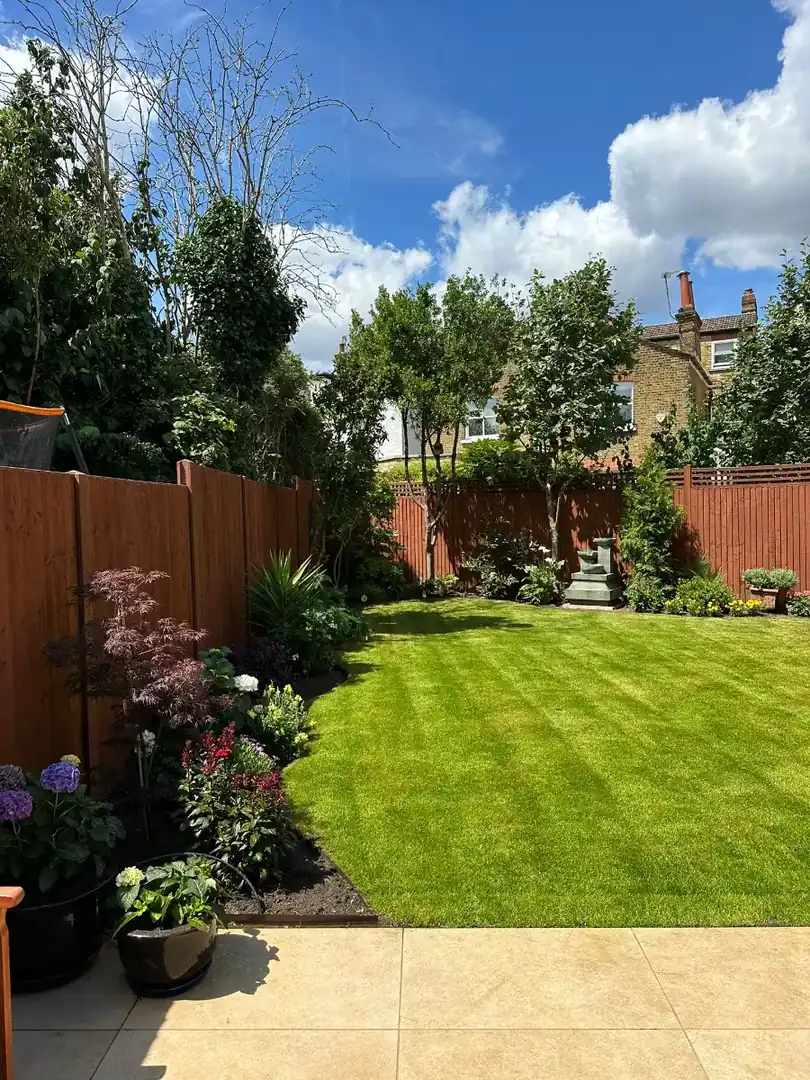
Give us a useful view of the lawn
Show the whole grass area, including the edges beside beds, fences and paving. Mention obstacles that may be hidden in long growth. If parts of the ground are soft or uneven, show those too.
A lawn’s condition influences the work as well as its size. Very long grass, awkward edges and limited access can change what needs assessing. Rough measurements help, but they should sit alongside photographs.
If there are separate front and rear lawns, explain whether they have different access. Include the route for bringing equipment to each space.
Look at the borders and hedge line
For weeding, show the intended planting clearly. Mark anything you want kept and identify plants that need discussing. A bed can contain useful planting even when unwanted growth has become the most visible part.
Hedges should be photographed along their full length. Include the available working space and anything close beside them. A narrow bed, fence or wall can affect access to the growth.
At the visit, a walk-round helps confirm the order of work. You can explain whether the lawn, borders or access routes are the main priority. Clippings from the agreed gardening are gathered, with any removal requirement assessed separately.