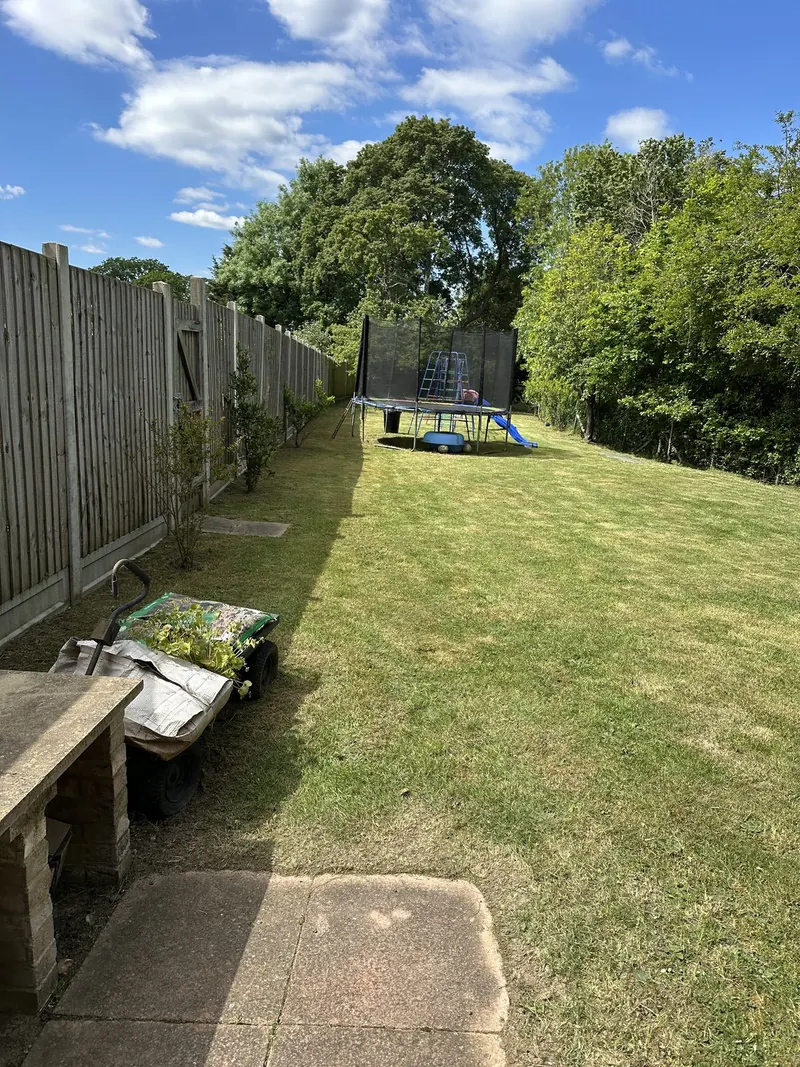
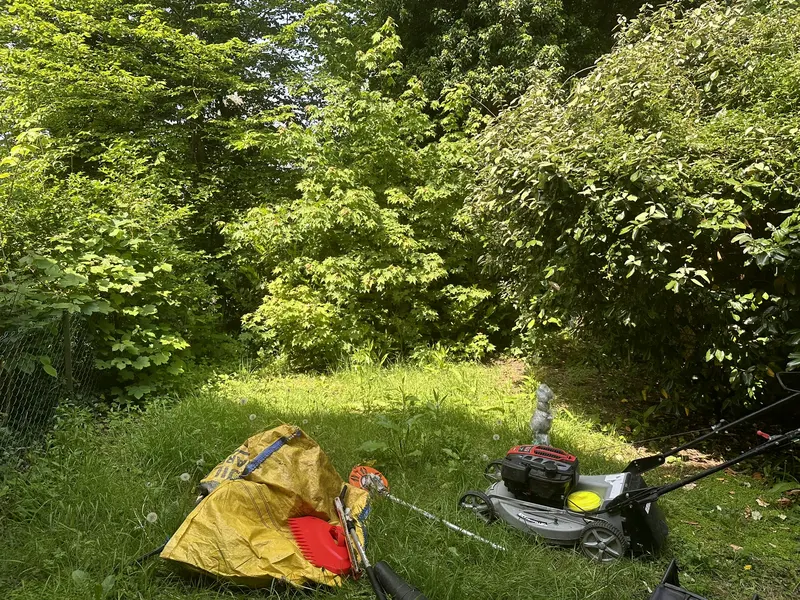
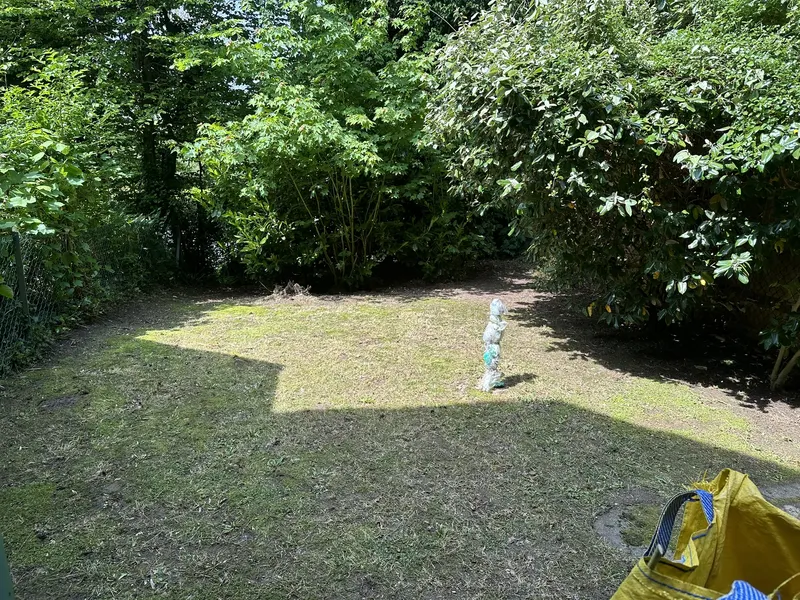
Long grass after a gap in care
Before choosing a mowing finish, mark what you know is beneath the longest growth. A hard border, a hidden step or loose items may change the first assessment. Take photos from a safe edge rather than stepping into growth you cannot see through. If you want just one route opened, draw the route on a picture and say where it needs to lead.
Compare the result you want with the condition shown. If the surface is established grass but it is long, ask about an initial mow. If rough weeds and objects dominate the area, describe a rough-cutting enquiry separately. Agree where any cut material can be gathered without closing off the route again.
Describe what the first visit should make possible. Opening enough room to reach a gate is different from leaving an established lawn ready for a repeat cut. If you are uncertain what lies under the growth, give the best view you can from the edge and say which areas are unknown. Mark obstacles you can identify by their position relative to a fence or path. Tell us if a route is available from the opposite side. That may make it easier to assess one part without crossing another.
Do not use the shortest grass as the only view of the site. Include the roughest section and show whether it extends into a bed or across a path. Then indicate which area is still a lawn. A quotation can distinguish an initial cut on accessible turf from an assessment for rough cutting. If the first stage leaves material to gather, show the point where it can be placed without blocking the route you wanted opened.
The RHS guidance on cutting long grass describes a higher initial setting and explains why very long growth may need strimming first. Use the strimming and brush cutting page if you want a rough-cut assessment.