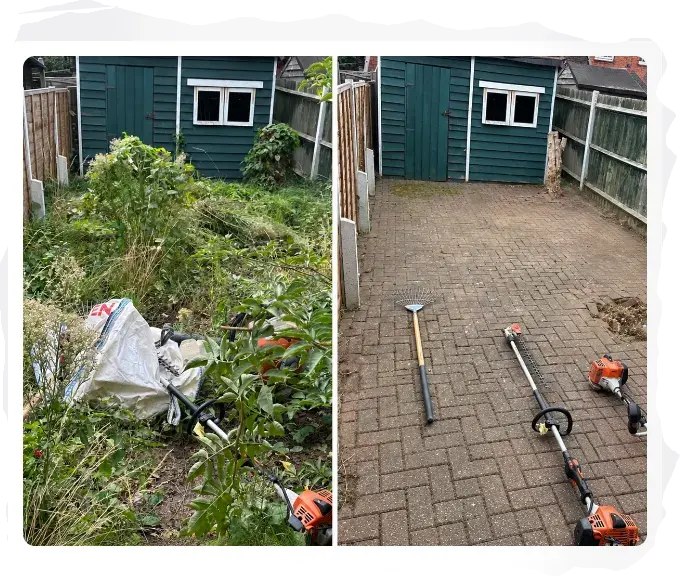
Decide what stays
Clearance starts with understanding the garden, not cutting everything indiscriminately. Identify shrubs, young trees and flowers you want to retain. A plant can be worth keeping even when it is surrounded by weeds. If you are uncertain about something, point it out before work starts.
We also need to know about loose objects and materials within the growth. Old pots, broken panels, rubble and household items need a separate look. A close photograph helps us understand what is vegetation and what else may need handling.
Compost heaps and bonfire remains can be considered for clearance with photos first and non-hazardous contents. Photograph those areas clearly rather than mixing them into a general view of the garden.
Work from access to the wider area
A clear route through the garden makes the remaining work easier to organise. We can then assess the order of cutback, weed removal and gathering the material. Dense growth around a boundary calls for care because the condition of the fence may only become visible as the vegetation is reduced.
The ground matters too. Soft patches, uneven paving and changes of level can affect movement through the space. Show these in your photographs where possible. If there is restricted rear access, include the narrowest point and any steps.
Clearing rodent nesting areas under decking is treated as clearing work. If that is part of your enquiry, describe the location and send photographs you can take safely. We do not offer pest control.