Read the support before planning the cut
There are three useful details in an ivy enquiry: the spread you can see, the point where stems enter it and the surface holding it up. Put those in separate pictures. A fence may look continuous under the foliage when a post or panel is already loose. A single close-up of green leaves gives no way to judge that. A wider view from the end of the fence shows the joins between panels and the area that needs to remain stable.
If there is growth across both a shed wall and a fence, name the two surfaces and identify which one you want cleared first. Send a view of the gap between them if you can take it from the ground. Mention parts of the growth you cannot see. If the growth reaches beyond the agreed working height, the written scope should make clear where the cut stops. No climbing is included.
Show a cracked surface before requesting a clean finish. The assessment can separate cutting back growth from work to the structure. Where a post moves, the aim may be to regain access to a gate or reveal the condition of one section before deciding what can be done elsewhere. Please leave loose sections in place for assessment.
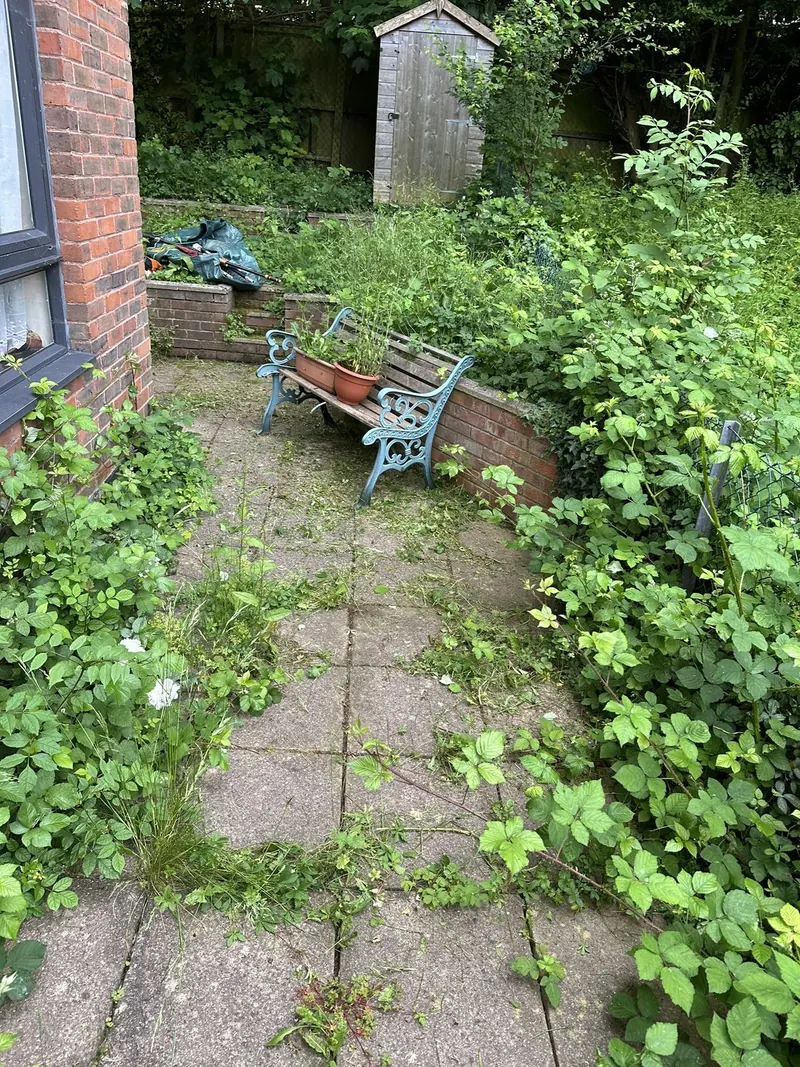
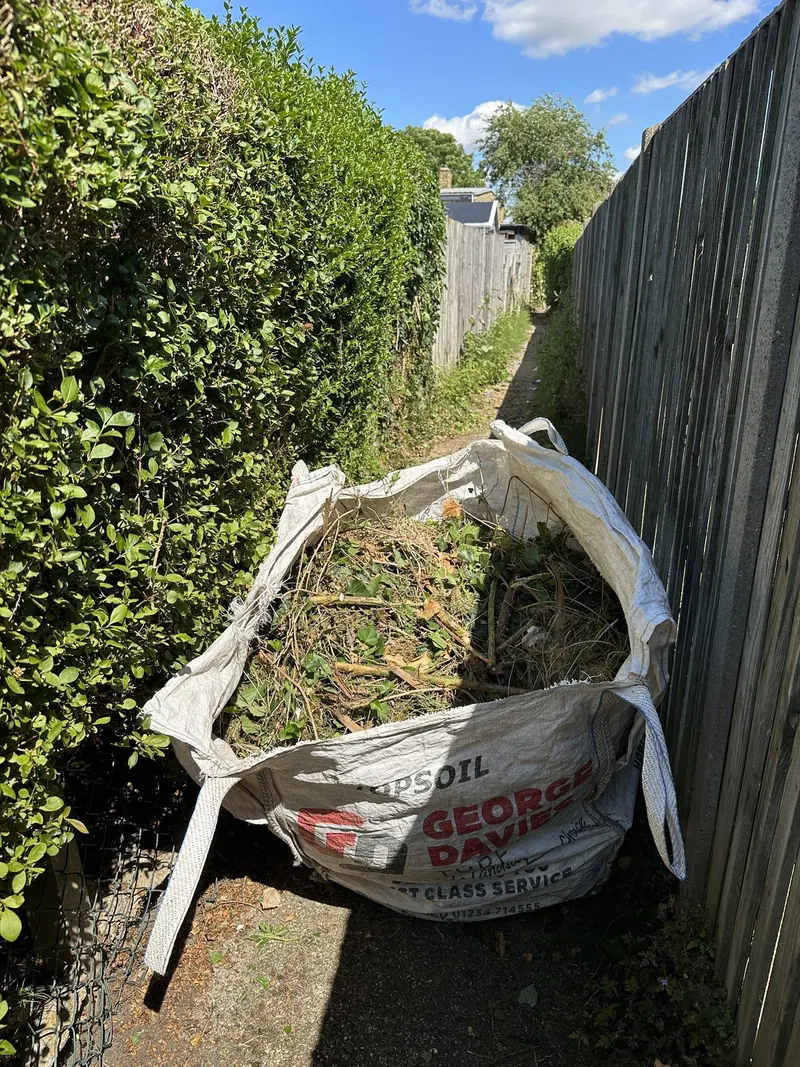
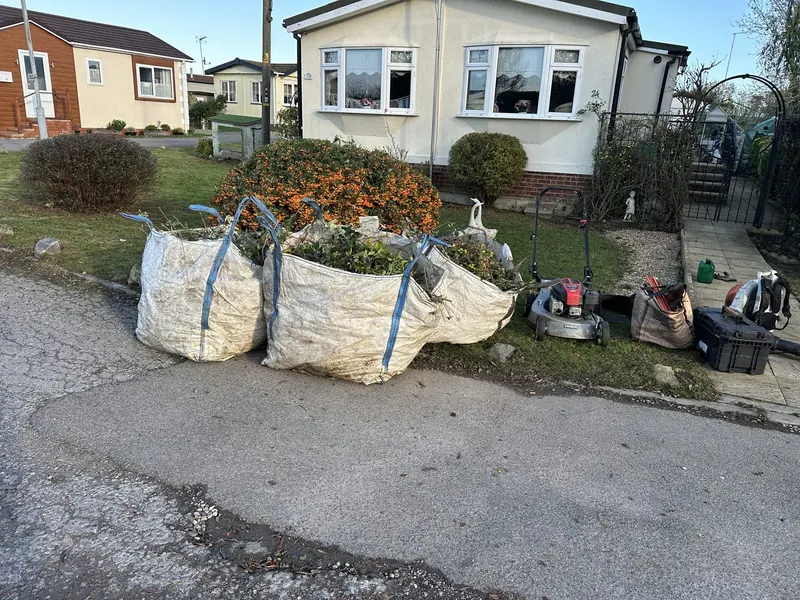
If the ivy runs into a bed you want to keep, mark the plants you care about in the wide view. Note any space needed to take cut growth out of the bed. Tell us whether you want the waste gathered at the property or taken away, and show the carry route. If you already have cut material there, make it a separate item in the enquiry.
Ivy on a weak fence or wall
A cutback and a repair are separate decisions. Show any weakness in the surface and tell us whether the whole area can be seen from the ground. That helps us agree where ivy trimming should stop and what can be left until the structure is assessed.
Tell us if you see nesting activity. It is unlawful to intentionally damage or destroy a wild bird’s nest while it is in use or being built. Leave the affected area undisturbed and see GOV.UK wild bird protection.