Plan a way through thorny growth
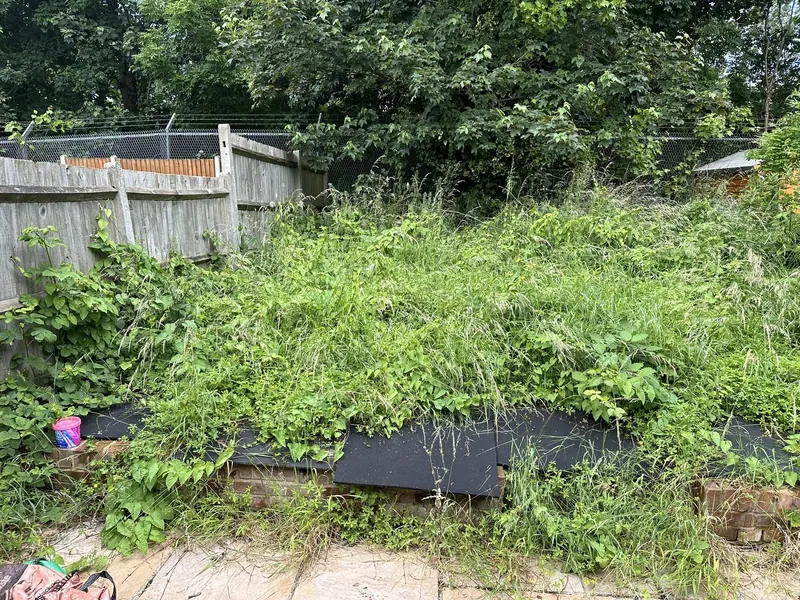
Treat the footprint as a set of short sections rather than one dense patch. Show which edge is available first and where it leads. A section crossing a walkway can be cut back to reopen a route, while the remainder may need a different approach if it runs through a border. Identify where loose canes can be laid as they are cut so the working route stays usable.
The protective approach starts with what can be seen and reached. Show any wire, sharp material or uncertain footing from outside the patch. If you have to lift a cane to take a photograph, leave that part for assessment. A view from the side can show where the tangle rises above a bed or hangs into a path. Photograph the retaining edge if the ground falls away behind the growth.
Mark the useful finish. If you need to reach the fence to check it, show the line you need open. If you are clearing a planted corner, identify the plants to keep and what space is available beside them. A retained shrub may define the stopping point more clearly than the outline of a tangled cane.
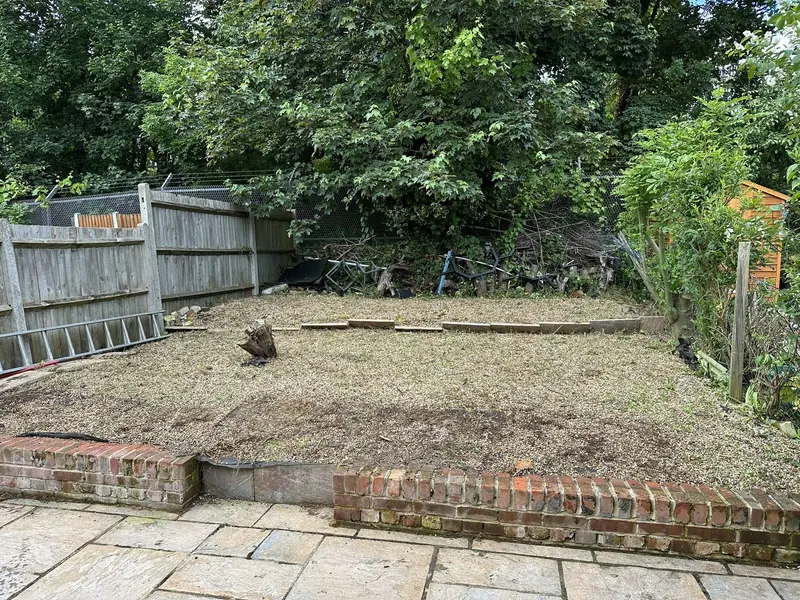
Separate the cutting brief from the handling of cut material. Name a place to gather it if it will stay with you. If you want it collected, describe the route past gates and steps and tell us if there is room to gather it without blocking access. Show any other pile separately so the estimate can distinguish the bramble cuttings from waste already present.
When the boundary has two kinds of growth
Show the canes and any ivy as separate features. A tangle between panels can conceal where each starts. Agree the section that needs opening and show any retained shrubs or fencing. If more of the plot needs attention, describe it as Garden clearance; if the climbing growth itself is the problem, see Ivy trimming and removal.