Should you repair your garden fence or replace it?
A repair may be worth assessing when the damage is confined to particular parts and the surrounding fence can remain. Replacement needs discussion when the proposed work extends along the boundary or you want a different specification. Photographs help identify the question; they cannot confirm the condition of hidden foundations. Show the full run and the damaged area before deciding how many panels to buy.
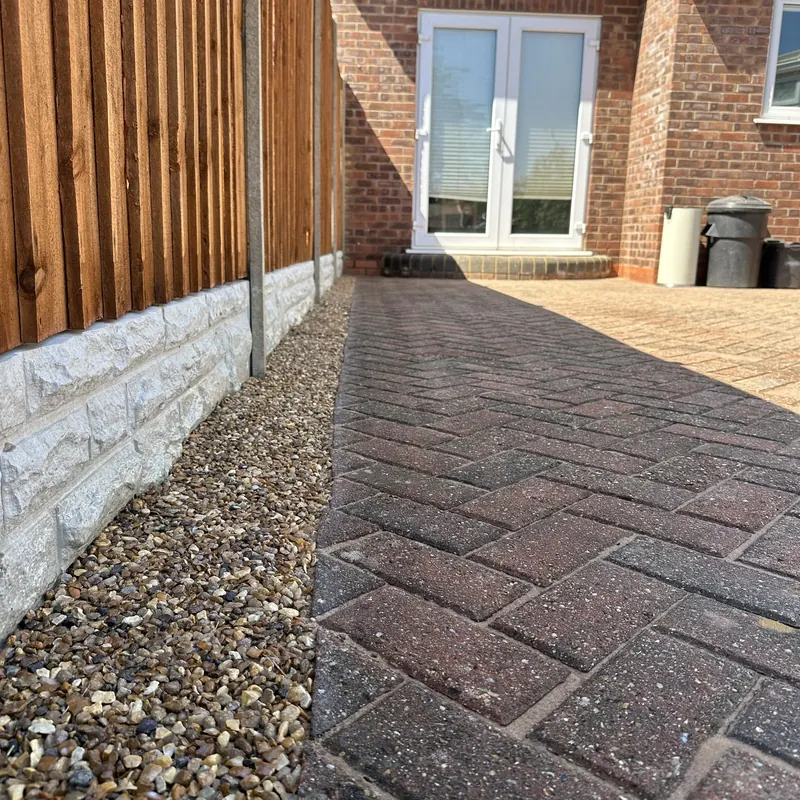
Installed fencing example: discuss the condition of your existing boundary separately.
Show the supports as well as the damaged panel
Take a wide view along the fence, then close views of the panel, the posts beside it and the base. Tell us whether the problem appeared after a particular event or has developed over time. Describe movement you have already noticed without pushing an unstable section to demonstrate it. Show gates and the point where the fence meets a wall or a different boundary.
List which parts you hope to keep. A quotation for a panel change should identify the proposed retained posts and any work needed around them. A wider replacement should define its start and end points. Neither decision follows from the appearance of the front face alone, especially where planting or stored items hide the supports.
Full run from each accessible end
Close views of damage and the base
Any gate or change in ground level
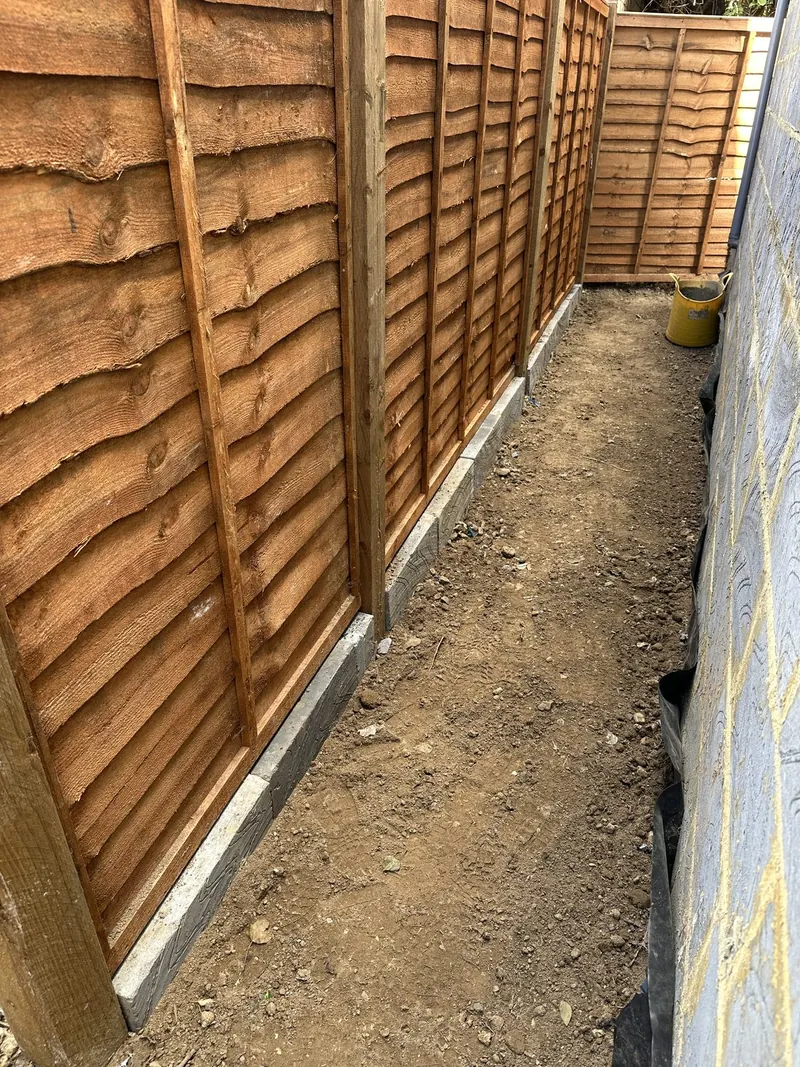
Installed fencing example: discuss the condition of your existing boundary separately.
Agree the boundary and the intended specification
Explain who can authorise the work and whether access to the other side is available. If the boundary position is uncertain, say so before proposing a new line. Identify plants, paving or gates that should remain. A replacement changes more than the appearance of one panel, so measurements and the intended height belong in the initial brief.
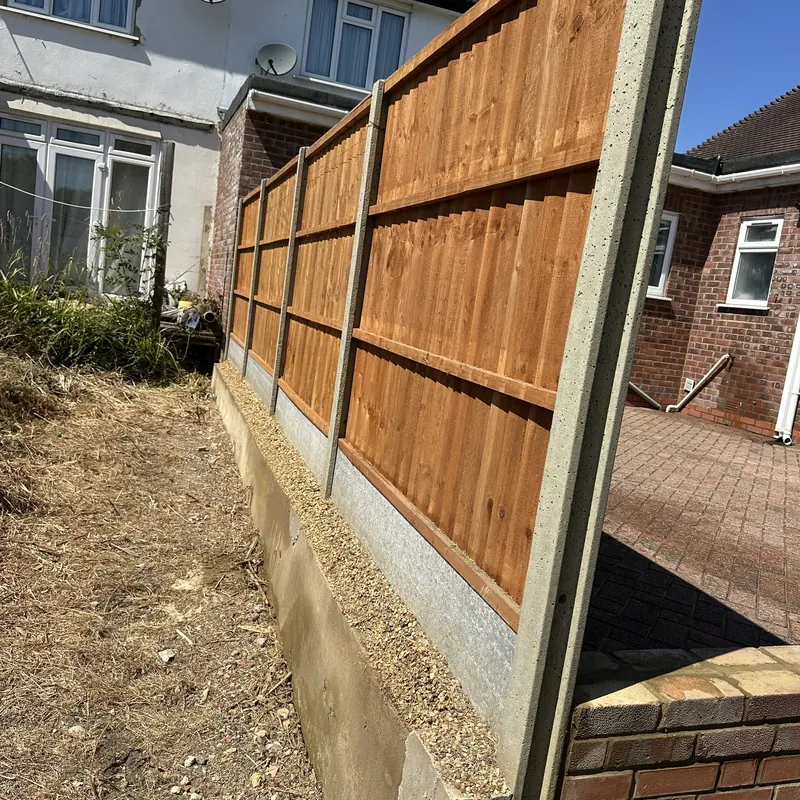
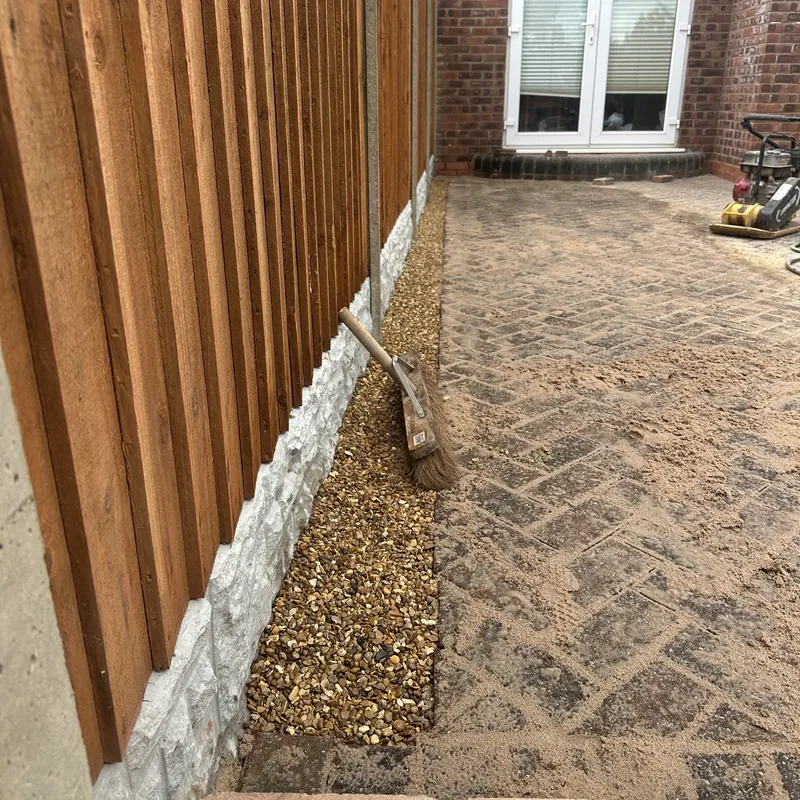
For planning questions, consult the Planning Portal fence guidance and your local planning authority before agreeing changes. Permission depends on the circumstances; a photograph of another finished fence is not a permission check for your property. Our real fencing photographs show installed panel and post examples. Use them to discuss the intended finish while the condition of your own boundary is assessed.
Scope question
Detail for the enquiry
Repair
Which damaged parts need assessment and what should remain
Replacement
Length, height, post type and proposed finish
Access
Which sides are reachable and who can authorise entry
Installed fencing example: discuss the condition of your existing boundary separately.
Price the whole agreed job, including old material
Fencing is quoted after photos or a site visit; labour is quoted separately from materials; waste is agreed separately in the quotation. Your quotation identifies the components and labour scope for the assessed boundary. State whether you want to supply panels or fittings, and provide their details before ordering. The specification should settle the materials rather than leave the choice to the day of the job.
Identify old fence material that you want taken away and any unrelated pile nearby. Removal should be named in the scope, alongside the treatment of the ground around posts. Compare quotations using that same list. Keep the boundary photographs, measurements and material choices together so the proposed repair or replacement can be reviewed before an appointment is confirmed.
Confirm retained parts
Agree who supplies the materials
Name the old material requested for removal
Questions about fence
Can you replace only a damaged panel?+
It can be assessed. Show the panel, its supporting posts and the neighbouring sections so the proposed retained parts are clear.
Should I order panels before contacting you?+
Discuss the dimensions and proposed specification first. If you intend to supply materials, provide the product details for the quotation.
Is old fence disposal automatically included?+
Ask for the agreed old material and removal arrangements to be listed in the quotation. Do not assume nearby rubbish is part of the same job.